
How to Build a Simple Daily Personal Care Routine
How to Build a Simple Daily Personal Care Routine
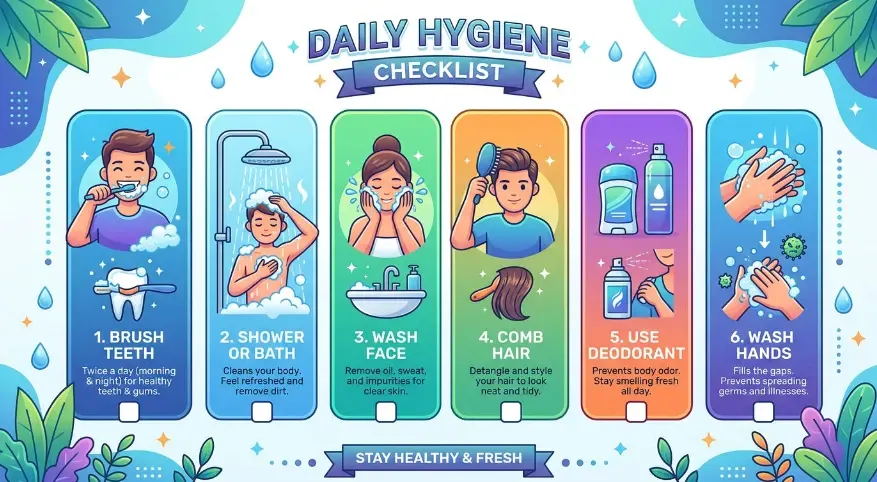
Key takeaways
- A daily personal care routine helps maintain hygiene, prevent illness, and support overall well-being.
- Consistent habits such as bathing, oral care, and grooming form the foundation of effective personal care.
- Simple routines are easier to maintain and more sustainable than complicated systems.
- Morning and evening routines help structure personal care throughout the day.
- Personal care routines can be adapted to individual lifestyles, schedules, and health needs.
To understand the broader role personal care plays in health and hygiene, see the foundational guide: Personal Care Explained: Daily Habits That Support Health and Hygiene.
Why Daily Personal Care Routines Matter
Daily routines help turn healthy behaviors into automatic habits. When personal care tasks are performed consistently at the same times each day, they require less mental effort and are less likely to be forgotten.- Maintains consistent hygiene
- Reduces the buildup of bacteria, sweat, and debris
- Supports skin and oral health
- Promotes comfort and confidence
- Encourages preventive health behaviors
The Core Elements of a Daily Personal Care Routine
While routines vary from person to person, most effective personal care routines include several core components.Personal Hygiene
Hygiene practices remove microbes, sweat, and environmental contaminants from the body. These habits help reduce infection risk and maintain comfort.- Showering or bathing regularly
- Washing hands throughout the day
- Using deodorant or antiperspirant
- Wearing clean clothing
Oral Care
Oral hygiene is an essential part of daily care because bacteria in the mouth can quickly accumulate if not removed regularly.- Brushing teeth at least twice daily
- Flossing once per day
- Rinsing the mouth when necessary
Grooming
Grooming practices help maintain a clean and well-maintained appearance while also supporting hygiene.- Washing and styling hair
- Trimming fingernails and toenails
- Shaving or maintaining facial hair
- Basic skincare practices
Skin Care
The skin is constantly exposed to environmental stressors such as pollution, sunlight, and sweat. Basic skincare helps maintain the skin’s natural protective barrier.- Washing the face
- Applying moisturizer when needed
- Protecting skin from sun exposure
Structuring a Morning Personal Care Routine
Morning routines prepare the body for daily activities. They help individuals start the day feeling clean, refreshed, and organized.- Washing the face or showering
- Brushing and flossing teeth
- Applying deodorant
- Grooming hair or facial hair
- Getting dressed in clean clothing
Structuring an Evening Personal Care Routine
Evening routines focus on removing contaminants accumulated during the day and preparing the body for rest.- Brushing and flossing teeth
- Washing the face
- Showering if needed
- Removing cosmetics or skincare products
- Preparing clean clothing for the next day
Keeping Personal Care Routines Simple
One of the most common mistakes people make when building routines is trying to include too many steps at once. Overly complex routines can become difficult to maintain and may lead to inconsistency.Effective routines often follow three principles:
Simplicity
Start with essential habits such as bathing, oral care, and handwashing.Consistency
Perform these habits at the same times each day.Adaptability
Adjust the routine to fit personal schedules and lifestyle.Simple routines are easier to sustain and more likely to become long-term habits.
Adapting Routines to Different Lifestyles
Personal care routines should be flexible enough to fit different schedules, environments, and personal needs.- Individuals with busy work schedules may rely on streamlined routines.
- Athletes may require additional hygiene practices after exercise.
- People with sensitive skin may need specialized skincare routines.
- Older adults may adapt routines to accommodate mobility changes.
Common Obstacles to Maintaining a Routine
Although personal care routines are simple in principle, various factors can disrupt them.- Irregular work schedules
- Fatigue or lack of motivation
- Limited access to hygiene facilities
- Travel or lifestyle changes
- Illness or physical limitations
Turning Personal Care into Lifelong Habits
Habits develop through repetition and consistency. When personal care practices are repeated daily, they gradually become automatic behaviors.- Performing hygiene tasks at the same times each day
- Linking habits to existing routines (such as brushing teeth before bed)
- Keeping hygiene supplies easily accessible
- Setting reminders until habits become automatic