
Choosing Hair Care Products for Your Hair Type
Choosing Hair Care Products for Your Hair Type
Key takeaways
- Choosing hair care products based on your hair type helps maintain moisture balance and prevent damage.
- Different hair textures and scalp conditions require different shampoo, conditioner, and styling formulations.
- Heavy products can weigh down fine hair, while lightweight products may not provide enough moisture for thick or curly hair.
- Understanding ingredient labels can help you avoid buildup, irritation, or unnecessary chemicals.
- Building a simple routine with appropriate products supports healthier, stronger hair over time.
As explained in the pillar guide on Hair and Scalp Care: Maintaining Strength, Growth, and Cleanliness, maintaining proper scalp balance and hair care habits is essential for long-term hair strength and cleanliness.
Why Hair Type Matters When Choosing Products
Hair type determines how hair behaves, how much oil it retains, and how easily it becomes dry or damaged. Products are typically designed to address the specific needs of different hair textures and scalp conditions.- Fine hair often needs lightweight formulas that add volume without weighing hair down.
- Thick or coarse hair often requires richer products that provide moisture and control frizz.
- Curly hair typically benefits from products that enhance hydration and curl definition.
Identifying Your Hair Type
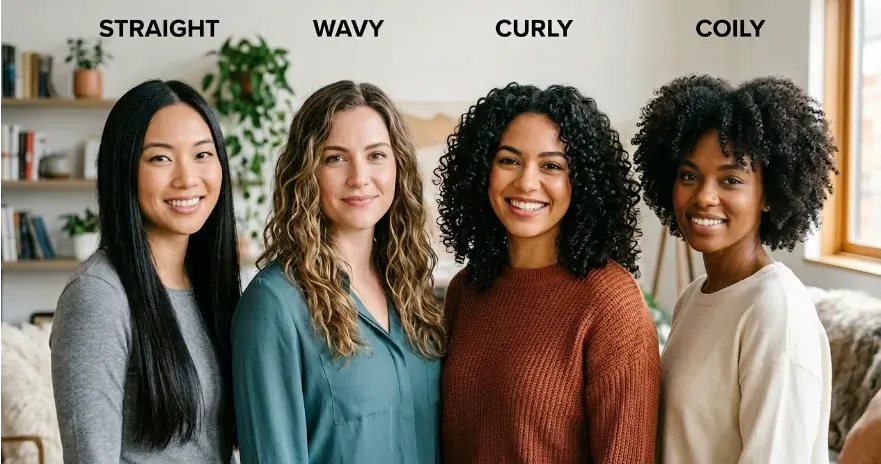
Before choosing products, it helps to understand your hair’s natural characteristics. Hair types are often categorized by texture and structure.Straight Hair
Straight hair lies flat from root to tip. Natural scalp oils travel easily along straight strands, which means this hair type can become oily faster than others.- Smooth texture
- Tendency toward oiliness
- Less natural volume
Wavy Hair
Wavy hair forms gentle curves and may have varying levels of texture throughout the hair.- Slight waves or loose curls
- Moderate frizz potential
- Balanced moisture needs
Curly Hair
Curly hair forms defined curls or spirals. Because oil travels more slowly along curly strands, this hair type is often more prone to dryness.- Higher moisture needs
- Greater frizz potential
- More fragile hair strands
Coily or Textured Hair
Coily hair forms tight curls or zig-zag patterns. This hair type is often the most delicate and requires significant moisture support.- High dryness risk
- Fragile hair strands
- Increased need for conditioning products
Choosing the Right Shampoo
Shampoo is designed primarily to cleanse the scalp and remove buildup. The right shampoo should clean the scalp without stripping natural oils.Different hair types benefit from different shampoo formulations.
For Oily Hair
Look for:- Clarifying shampoos
- Lightweight cleansing formulas
- Oil-balancing ingredients
These products help remove excess sebum and maintain scalp freshness.
For Dry Hair
Choose shampoos that contain moisturizing ingredients such as:- Glycerin
- Natural oils
- Hydrating botanical extracts
Moisturizing shampoos help prevent further dryness.
For Curly or Textured Hair
Curly hair often benefits from sulfate-free shampoos, which cleanse the scalp while preserving natural moisture.
These formulas reduce dryness and maintain curl definition.
For Color-Treated Hair
Color-treated hair may require specialized shampoos that help protect hair color while maintaining hydration.Gentle cleansing formulas are often recommended.
Choosing the Right Conditioner
Conditioners help smooth the hair cuticle and protect hair strands from damage. The right conditioner depends largely on hair thickness and moisture needs.Lightweight Conditioners
Best for:- Fine hair
- Oily hair
- Hair that easily becomes flat
These formulas provide hydration without adding excessive weight.
Deep Moisturizing Conditioners
Recommended for:- Thick hair
- Curly hair
- Dry or damaged hair
These products provide deeper hydration and improve hair elasticity.
Leave-In Conditioners
Leave-in products remain in the hair after washing and can help:- Reduce tangles
- Protect against heat styling
- Maintain moisture throughout the day
They are especially beneficial for curly or textured hair types.
Understanding Product Ingredients
Reading ingredient labels can help you choose products that support healthy hair rather than causing buildup or irritation.Sulfates
Strong cleansing agents that remove oil and buildup. While effective, they may be too harsh for dry or curly hair.Silicones
Ingredients that smooth the hair surface and add shine. Some silicones may accumulate on the hair over time if not removed with clarifying shampoos.Natural oils
Examples include coconut oil, argan oil, and jojoba oil. These oils can help moisturize hair and reduce frizz.Humectants
Ingredients such as glycerin attract moisture and help keep hair hydrated. Understanding these ingredients can help you choose products that align with your hair’s needs.Avoiding Product Buildup
Using too many products or heavy formulations can lead to buildup on both the hair and scalp.- Dull or heavy hair
- Difficulty styling
- Increased scalp itching
- Hair that feels sticky or coated
Building a Simple Hair Care Routine
A basic hair care routine does not need to involve dozens of products. Most routines include three core steps:- Cleansing with an appropriate shampoo
- Conditioning to maintain moisture and manageability
- Styling or protection using minimal products suited to your hair type
Adjusting Products Over Time
Hair care needs can change due to factors such as:- Climate
- Seasonal humidity
- Age
- Hormonal changes
- Lifestyle habits