
Autoimmune Conditions Explained Simply
Autoimmune Conditions Explained Simply
Key takeaways
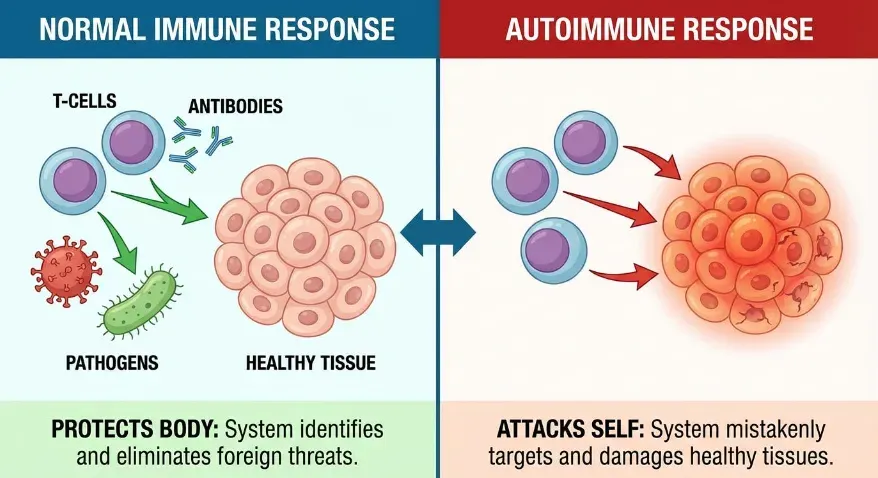
- Autoimmune diseases occur when the immune system mistakenly attacks the body’s own tissues.
- These conditions can affect many organs including joints, skin, thyroid, nerves, and digestive tract.
- Genetics, environmental triggers, infections, and immune regulation all play roles in autoimmune disease.
- Many autoimmune conditions involve chronic inflammation that can fluctuate in periods of flare and remission.
- Understanding immune system balance helps explain why autoimmune diseases often affect multiple body systems.
To understand how this happens, it helps to first look at how the immune system normally works and how disruptions in immune balance can contribute to disease. If you want a broader overview of how digestive and immune systems interact, see Digestive and Immune Disorders: How Gut Health Affects the Whole Body.
What Is an Autoimmune Disease?
An autoimmune disease is a condition in which the immune system attacks healthy cells instead of protecting them.In a healthy immune response, immune cells identify and eliminate harmful invaders such as bacteria, viruses, or toxins. They rely on a complex recognition system that distinguishes “self” from “non-self.”
In autoimmune disease, this recognition system fails.
- inflammation
- tissue damage
- pain or swelling
- organ dysfunction
There are more than 80 recognized autoimmune diseases, and they can affect almost any part of the body.
Common Types of Autoimmune Diseases
Autoimmune conditions vary widely depending on which tissues the immune system targets.Some well-known examples include:
Rheumatoid Arthritis
This disease causes immune attacks on the joints, leading to inflammation, stiffness, and progressive joint damage if untreated.Type 1 Diabetes
In type 1 diabetes, the immune system destroys insulin-producing cells in the pancreas, preventing the body from regulating blood sugar.Multiple Sclerosis
Multiple sclerosis affects the nervous system. The immune system attacks the protective myelin covering around nerve fibers, disrupting nerve signals between the brain and body.Hashimoto’s Thyroiditis
This autoimmune thyroid condition causes immune damage to thyroid tissue, often leading to reduced thyroid hormone production.Lupus
Systemic lupus erythematosus (SLE) is a complex autoimmune disease that can affect multiple organs including skin, joints, kidneys, and blood vessels.These examples illustrate how autoimmune diseases can affect different organs but share similar immune system mechanisms.
Why Does the Immune System Attack the Body?
Researchers still do not fully understand why autoimmune diseases develop, but several factors appear to contribute.Most scientists believe autoimmune disease results from a combination of genetic susceptibility and environmental triggers.
Genetics
Certain genes influence how the immune system recognizes threats. Some genetic variations can increase the likelihood that immune tolerance may fail. However, genetics alone rarely causes autoimmune disease.Environmental Triggers
Various environmental exposures may trigger immune responses in genetically susceptible individuals. These triggers can include:- infections
- certain medications
- environmental toxins
- hormonal changes
- smoking
Immune Regulation Problems
The immune system contains regulatory cells that normally prevent excessive immune reactions. If these regulatory mechanisms fail, immune responses may become uncontrolled or misdirected.The Role of Inflammation
Inflammation is a normal immune response designed to protect the body from injury or infection.In autoimmune disease, however, inflammation can become chronic and self-sustaining.
- pain
- swelling
- fatigue
- tissue damage
Why Symptoms Can Vary So Much
One of the most challenging aspects of autoimmune diseases is that symptoms can differ greatly from person to person.Many autoimmune diseases also follow a pattern of flare and remission:
- Flare: symptoms worsen due to increased immune activity
- Remission: symptoms improve when immune activity decreases
Autoimmune Diseases and the Immune–Gut Connection
Scientists have increasingly studied the relationship between immune function and gut health.- immune tolerance
- inflammatory signaling
- immune cell activation
Diagnosing Autoimmune Conditions
Diagnosing autoimmune disease typically involves a combination of:- medical history
- physical examination
- blood tests that detect immune activity or autoantibodies
- imaging or organ-specific tests
Treatment and Management
There is currently no universal cure for autoimmune diseases, but many treatments can help manage symptoms and control immune activity.Treatment strategies may include:
Anti-inflammatory medications
These medications help reduce inflammation and relieve symptoms.Immune-modulating therapies
Some treatments specifically target parts of the immune system that drive autoimmune reactions.Lifestyle and supportive care
Many people with autoimmune disease benefit from supportive strategies such as:- balanced nutrition
- stress management
- adequate sleep
- regular physical activity
Living With Autoimmune Disease
Autoimmune diseases are often chronic conditions, but many people manage them successfully with medical care and lifestyle adjustments. Ongoing research continues to improve understanding of:- immune system regulation
- genetic risk factors
- environmental triggers
- new treatment approaches
References
National Institute of Allergy and Infectious Diseases. Autoimmune Diseases Overview
Davidson A, Diamond B. “Autoimmune diseases.” New England Journal of Medicine
Rose NR, Mackay IR. The Autoimmune Diseases
Gershwin ME, Shoenfeld Y. Autoimmunity and Disease Mechanisms