
Why Moisturizing Matters for Skin Health
Why Moisturizing Matters for Skin Health
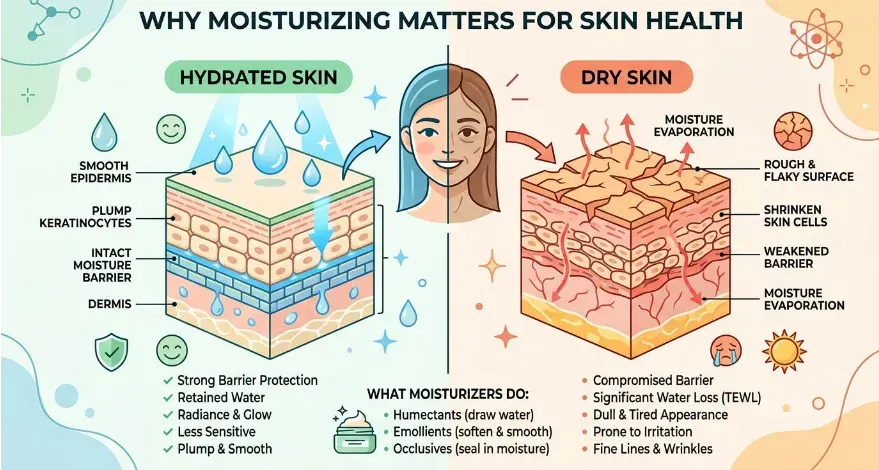
Key takeaways
- Moisturizing helps maintain hydration and supports the skin’s protective barrier.
- Healthy skin requires balanced water content to stay smooth, flexible, and resilient.
- Moisturizers reduce dryness, irritation, and flaking by preventing moisture loss.
- Different skin types benefit from different moisturizer formulations.
- Applying moisturizer after cleansing helps lock in hydration and protect the skin.
For a broader overview of how moisturizing fits into a complete skin routine, see the foundational guide: Skin and Body Care Basics: Cleansing, Moisturizing, and Protection.
Understanding Skin Hydration
Skin hydration refers to the amount of water retained within the outer layers of the skin. This hydration helps maintain the skin’s structure, flexibility, and protective capacity.The outermost layer of the skin, known as the stratum corneum, acts as a barrier that helps regulate moisture levels. This layer contains natural lipids and proteins that work together to:
- Retain water within the skin
- Prevent excessive evaporation
- Protect against irritants and microbes
- Maintain a smooth and flexible surface
The Skin Barrier and Moisture Loss
The skin barrier functions like a protective seal. When it is healthy, it prevents excessive transepidermal water loss, which is the gradual evaporation of moisture from the skin’s surface.
- Cold or dry weather
- Frequent washing with harsh cleansers
- Environmental pollutants
- Aging-related changes in skin structure
- Low indoor humidity
How Moisturizers Work
Most moisturizers improve skin hydration using a combination of three main ingredient types.Humectants
Humectants attract water to the outer layers of the skin.Common humectants include:
- Glycerin
- Hyaluronic acid
- Urea
- Aloe vera
Emollients
Emollients smooth the skin and fill small gaps between skin cells.Examples include:
- Fatty acids
- Ceramides
- Plant oils
- Shea butter
Occlusives
Occlusives form a protective layer that reduces water evaporation from the skin.Examples include:
- Petrolatum
- Lanolin
- Beeswax
- Dimethicone
Benefits of Regular Moisturizing
Consistent moisturizing provides several benefits that contribute to overall skin health.Maintaining Skin Hydration
Moisturizers help the skin retain water, preventing dryness and discomfort.Supporting the Skin Barrier
Hydrated skin is better able to maintain its protective barrier against environmental irritants.Improving Skin Texture
Moisturizing smooths the skin’s surface, reducing roughness and flaking.Reducing Irritation
Well-hydrated skin is less likely to develop irritation or sensitivity caused by dryness.Supporting Skin Repair
The skin constantly repairs itself. Adequate hydration supports these natural regenerative processes.When Should You Apply Moisturizer?
Moisturizer is most effective when applied at the right time.After Cleansing
Applying moisturizer after cleansing helps restore hydration that may have been lost during washing.Many skin care professionals recommend applying moisturizer within a few minutes after cleansing, while the skin is still slightly damp.
After Showering or Bathing
Body moisturizers are often applied after bathing, when the skin has absorbed water and is more receptive to hydration.During Dry Weather
In colder climates or during winter months, skin may require more frequent moisturizing due to reduced humidity.Choosing the Right Moisturizer for Your Skin Type
Different skin types benefit from different moisturizer formulations.Dry Skin
Dry skin typically benefits from richer creams or ointments that contain:- Occlusive ingredients
- Ceramides
- Nourishing oils
Oily Skin
People with oily skin may prefer lightweight moisturizers such as:- Gel-based formulas
- Water-based lotions
- Oil-free products
Combination Skin
Combination skin may benefit from balanced formulations that hydrate without feeling heavy.Sensitive Skin
Sensitive skin often responds best to products that are:- Fragrance-free
- Dye-free
- Formulated with minimal ingredients
Moisturizing the Face vs. the Body
Facial skin and body skin often have different needs.
Facial skin is generally thinner and more exposed to environmental stressors. Facial moisturizers are often lighter and formulated to avoid clogging pores.- Elbows
- Knees
- Hands
- Legs
The Role of Moisturizing in Long-Term Skin Care
Moisturizing is not just a cosmetic step. It is a key component of maintaining healthy skin over time.- Barrier protection
- Skin flexibility
- Comfort and hydration
- Reduced dryness-related irritation
For a deeper look at daily protection habits that work alongside moisturizing, see the guide: Daily Skin Protection Habits You Should Not Ignore.