
Why Mobility Matters More Than Flexibility
Why Mobility Matters More Than Flexibility
Key takeaways
- Flexibility is passive range of motion; mobility is active control of that range.
- Mobility requires strength, coordination, and joint stability — not just muscle length.
- Limited mobility often leads to compensation patterns and higher injury risk.
- Improving mobility enhances strength output and movement efficiency.
Many people use the terms mobility and flexibility interchangeably. In practice, they describe two very different physical qualities — and confusing them can limit performance and increase injury risk.
If you haven’t read the broader foundation of this pillar, start with Mobility, Flexibility, and Recovery: The Missing Links in Most Workout Plans
to understand how these systems fit together.Flexibility: Passive Range of Motion
Flexibility refers to how far a muscle can lengthen when an external force moves it. Examples:- Reaching down to touch your toes
- Pulling your heel toward your glutes in a quad stretch
- Using gravity to sink into a hamstring stretch
- Muscle tissue length
- Neural tolerance to stretch
- Connective tissue properties
Mobility: Usable, Controlled Range
Mobility refers to your ability to actively move a joint through its full available range with strength and stability. It requires:- Adequate muscle length
- Joint capsule integrity
- Neuromuscular coordination
- Strength at end ranges
- Proprioceptive control
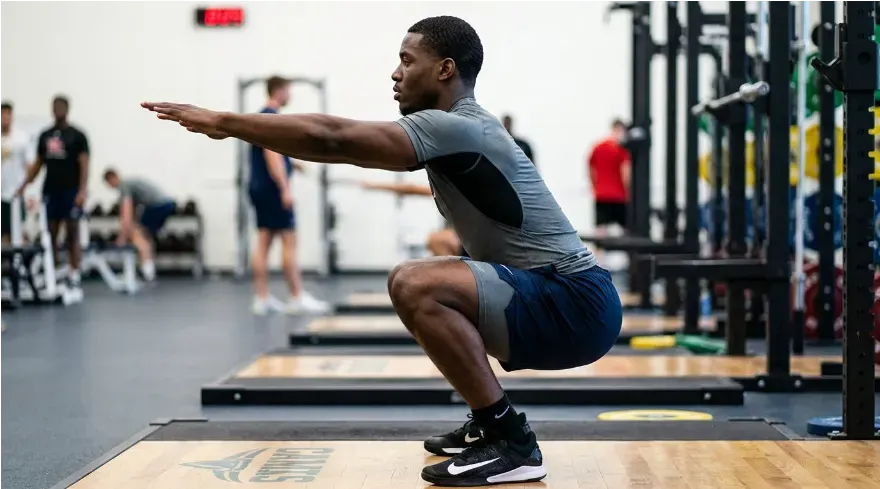
- A deep squat requires hip, ankle, and thoracic mobility
- An overhead press requires shoulder mobility and core stability
- Sprinting requires dynamic hip extension mobility
Why Mobility Is More Relevant for Strength Training
Strength training occurs under resistance. That means joints must not only move — they must stabilize and transfer force.- The joint may lack stability
- Load may shift to passive structures (ligaments, joint capsules)
- Compensation patterns emerge
- Range of motion shortens
- Technique deteriorates
- Adjacent joints absorb stress
- Limited ankle mobility can increase knee valgus during squats
- Poor thoracic mobility can overload the shoulders in pressing
- Restricted hip mobility can increase lumbar strain
The Stability–Mobility Balance
The body functions as a kinetic chain. Some joints are built for mobility (hips, shoulders), others for stability (knees, lumbar spine). When mobility is lacking where it should exist:- Stability joints compensate by moving excessively
- Wear and irritation accumulate
- Passive range expands without active control
- Instability risk increases
- Range expansion
- Strength development within that range
- Motor control refinement
The Injury Prevention Implications
Many overuse injuries stem from repeated compensation patterns. Common examples:- Shoulder impingement from limited thoracic mobility
- Patellar irritation from restricted hip control
- Lower back pain from poor hip mobility
- Restores joint mechanics
- Reduces overload on passive tissues
- Improves load distribution
How to Improve Mobility (Not Just Flexibility)
Mobility improvements require active engagement. Effective strategies include:1. Controlled Articular Rotations (CARs)
Move joints slowly through full ranges under muscular control.2. Strength at End Range
Pause and strengthen positions where you typically feel restricted.3. Dynamic Warm-Up Integration
Use movement-based drills that resemble your training patterns.4. Progressive Loading Through Range
Gradually increase resistance within newly developed range. Passive stretching can support mobility gains, but it should not replace active control work.When Flexibility Still Matters
Flexibility is not irrelevant. It can:- Reduce acute muscle tightness
- Improve tolerance to movement extremes
- Support mobility work
- Enhance relaxation post-training
The Bottom Line
Flexibility expands potential range. Mobility determines usable range. Strength training, athletic performance, and injury resilience depend on mobility because it integrates:- Movement capacity
- Stability
- Coordination
- Strength