
When to Seek Professional Help for Mental Health
When to Seek Professional Help for Mental Health
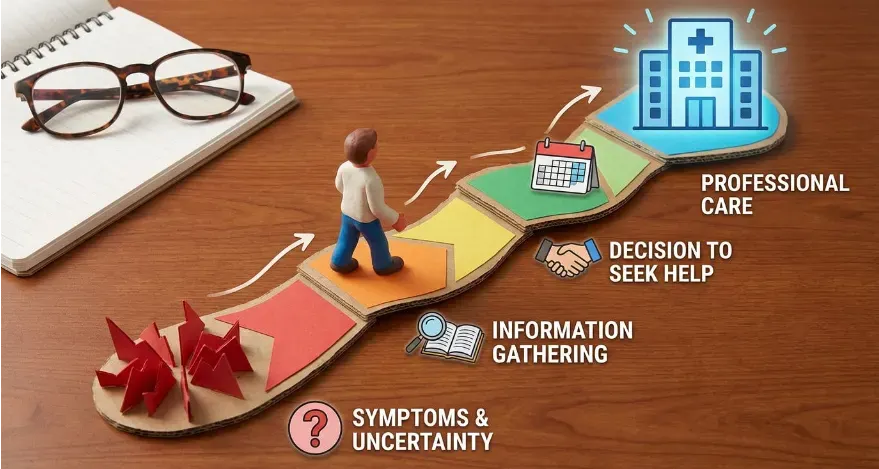
Key takeaways
- Professional mental health support may be needed when emotional symptoms become persistent, intense, or interfere with daily life.
- Common warning signs include prolonged sadness, severe anxiety, withdrawal from relationships, and difficulty functioning.
- Early intervention can improve recovery outcomes and prevent mental health conditions from worsening.
- Mental health professionals provide therapy, assessments, and treatment plans tailored to individual needs.
- Seeking help is a proactive step toward improving long-term emotional wellbeing.
Understanding the warning signs of mental health difficulties—and knowing when to seek help—can make it easier to access the support needed to recover and regain stability. As explained in Mental Health Support: Therapy, Self-Care, and
Professional Help, professional care is one part of a broader mental health support system that includes therapy, self-care, and social support.
Understanding When Professional Support May Be Needed
Many people hesitate to seek mental health care because they believe their problems are not serious enough or that they should manage difficulties on their own. However, mental health professionals are trained to help with a wide range of challenges, from everyday stress to complex psychological conditions.- Persist for weeks or months
- Become more intense over time
- Interfere with work, school, or relationships
- Feel overwhelming or difficult to manage alone
Common Signs It May Be Time to Seek Help
Mental health conditions often develop gradually. Some symptoms may appear mild at first but grow more disruptive over time.Persistent Sadness or Low Mood
Occasional sadness is normal, particularly during stressful or disappointing life events. However, when low mood persists for extended periods or begins affecting daily functioning, professional support may help.- Ongoing feelings of sadness or emptiness
- Loss of motivation or interest in activities
- Difficulty experiencing enjoyment or pleasure
Severe or Persistent Anxiety
Anxiety is a natural response to stress, but chronic or excessive anxiety can interfere with daily life.- Constant worry or nervousness
- Panic attacks or sudden intense fear
- Difficulty concentrating due to anxiety
- Avoidance of situations that trigger stress
Difficulty Functioning in Daily Life
Mental health challenges sometimes interfere with a person’s ability to manage everyday responsibilities.- Difficulty maintaining work or school performance
- Struggling to complete routine tasks
- Withdrawal from social activities
- Reduced motivation or energy
Major Changes in Sleep or Appetite
Significant changes in sleep patterns or appetite can sometimes signal mental health difficulties.- Chronic insomnia or difficulty sleeping
- Excessive sleeping or fatigue
- Loss of appetite or overeating
- Noticeable weight changes related to stress or mood
Emotional Withdrawal or Isolation
People experiencing mental health challenges sometimes withdraw from relationships or social activities.- Avoiding friends or family
- Loss of interest in social interaction
- Feeling disconnected or emotionally numb
- Increased feelings of loneliness
Difficulty Managing Stress or Emotions
Everyone experiences stress, but some individuals may feel overwhelmed by emotions or unable to regulate them effectively.- Frequent irritability or anger
- Emotional outbursts
- Difficulty calming down during stressful situations
- Feeling emotionally overwhelmed by everyday challenges
Thoughts of Self-Harm or Suicide
Thoughts about self-harm or suicide require immediate attention and professional care. These thoughts may occur during severe emotional distress and should never be ignored.- Expressing hopelessness or feeling trapped
- Talking about wanting to die
- Engaging in self-harming behaviors
- Giving away possessions or preparing for death
Types of Professionals Who Provide Mental Health Care
Mental health support can come from several types of licensed professionals, each with different training and specialties.Common professionals include:
Psychologists
Psychologists specialize in psychological assessment, therapy, and research. They often provide psychotherapy for a wide range of mental health concerns.Psychiatrists
Psychiatrists are medical doctors who specialize in mental health. They can diagnose conditions, prescribe medication, and provide treatment planning.Licensed Therapists and Counselors
Licensed therapists—including clinical social workers, professional counselors, and marriage and family therapists—provide psychotherapy and emotional support.What to Expect When Seeking Professional Help
For many people, the first step in seeking support is scheduling an initial consultation with a therapist or mental health professional.- Ask about current symptoms and concerns
- Discuss personal history and life circumstances
- Identify possible mental health conditions
- Develop a treatment plan tailored to the individual
Barriers That Sometimes Prevent People From Seeking Help
Despite the benefits of professional care, many people delay or avoid seeking support.- Mental health stigma
- Concerns about cost or insurance
- Fear of judgment or misunderstanding
- Uncertainty about where to start
Early Support Improves Mental Health Outcomes
Research consistently shows that early intervention improves mental health outcomes. When individuals seek support early, they are often able to manage symptoms more effectively and prevent long-term complications.- Reduce the severity of symptoms
- Improve coping skills
- Strengthen resilience
- Restore daily functioning more quickly
Seeking Help Is a Positive Step Toward Recovery
Mental health challenges are common and treatable. Seeking help from a trained professional is not a sign of weakness—it is a proactive step toward improving emotional health.References
- National Institute of Mental Health. Mental Illness and Treatment
- American Psychological Association. Recognizing the Signs of Mental Health Problems
- World Health Organization. Mental Health and Early Intervention
- Substance Abuse and Mental Health Services Administration (SAMHSA). When to Seek Help for Mental Health Concerns
- Mayo Clinic. Mental Health Disorders: Symptoms and Causes