
Macronutrients Explained: Protein, Carbs, and Fats Made Simple
Macronutrients Explained: Protein, Carbs, and Fats Made Simple
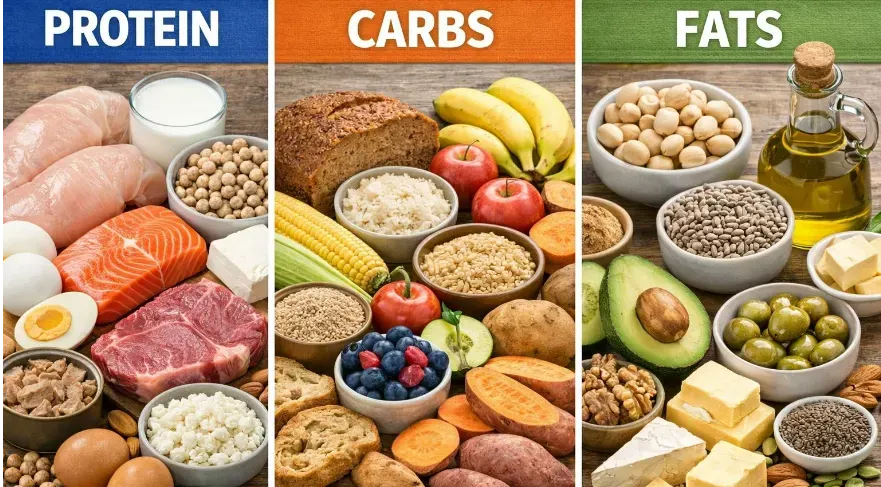
Key takeaways
- Macronutrients include protein, carbohydrates, and fats — each serving essential and distinct functions.
- Protein supports tissue repair, enzymes, hormones, and muscle maintenance.
- Carbohydrates are the body’s preferred energy source, especially for the brain and exercise.
- Fats regulate hormones, protect organs, and help absorb fat-soluble vitamins.
- Balanced intake matters more than eliminating any one macronutrient.
What Are Macronutrients?
Macronutrients are nutrients required in gram-level amounts. Unlike vitamins and minerals (micronutrients), macronutrients provide calories — the energy your body uses to function.- Protein: 4 calories per gram
- Carbohydrates: 4 calories per gram
- Fat: 9 calories per gram
Let’s break down each macronutrient in practical, clear terms.
Protein: Structure, Repair, and Function
Protein is made of amino acids, often described as the building blocks of life. Every cell in your body contains protein.What Protein Does
- Repairs and builds muscle tissue
- Produces enzymes and hormones
- Supports immune function
- Maintains skin, hair, nails, and connective tissue
- Helps regulate fluid balance
Common Protein Sources
- Lean meats and poultry
- Fish and seafood
- Eggs
- Dairy products
- Legumes and beans
- Tofu and tempeh
- Nuts and seeds
How Much Protein Do You Really Need Per Day?
Carbohydrates: The Body’s Primary Fuel
Carbohydrates are often misunderstood. In reality, they are the body’s preferred and most efficient energy source.- The brain
- The nervous system
- Working muscles
- High-intensity exercise
Types of Carbohydrates
Carbohydrates vary in structure and quality:- Simple carbohydrates: Sugars that digest quickly
- Complex carbohydrates: Starches and fiber that digest more slowly
Healthy Carbohydrate Sources
- Whole grains
- Fruits
- Vegetables
- Legumes
- Tubers (like potatoes and sweet potatoes)
Are Carbohydrates Bad? Understanding Carb Quality
Fats: Hormones, Absorption, and Long-Term Energy
Dietary fat plays a central role in long-term health. It is essential for survival.What Fat Does
- Supports hormone production
- Protects internal organs
- Helps absorb vitamins A, D, E, and K
- Contributes to cell membrane integrity
- Provides sustained energy
- Unsaturated fats: Often found in plant foods and fish
- Saturated fats: Found in animal products and some tropical oils
- Trans fats: Artificial fats that should be minimized
Healthy Fats vs Unhealthy Fats: What Matters Most
How Macronutrients Work Together
Macronutrients do not operate independently. Meals typically contain a mix of all three, and this combination affects digestion, satiety, and energy stability.For example:
- Adding protein and fat to carbohydrates slows digestion.
- Combining all three improves fullness.
- Balanced meals reduce blood sugar spikes.
Do You Need to Track Macros?
Tracking macronutrients (often called “counting macros”) can be useful for:- Athletic performance
- Body composition goals
- Medical nutrition therapy
- Protein supports repair and muscle
- Carbs fuel activity
- Fats regulate hormones and absorption
How Much of Each Macronutrient Should You Eat?
There is no universal ratio that works for everyone. Needs vary based on:- Activity level
- Age
- Health conditions
- Body composition goals
- Personal preference
- 45–65% of calories from carbohydrates
- 10–35% from protein
- 20–35% from fat
Common Myths About Macronutrients
Myth 1: Carbs Make You Gain Weight
Weight gain depends on total calorie intake, not one macronutrient alone.Myth 2: Fat Makes You Fat
Dietary fat does not automatically translate to body fat. Excess calories do.Myth 3: More Protein Is Always Better
Protein supports muscle, but extremely high intakes are not necessary for most people.Final Thoughts
Protein, carbohydrates, and fats are not competing forces. They are cooperative systems.- Build balanced meals
- Support energy levels
- Improve recovery
- Make informed dietary decisions