
The Ultimate Guide to Lifestyle & Wellness: Foundations for Lifelong Health
The Ultimate Guide to Lifestyle & Wellness: Foundations for Lifelong Health
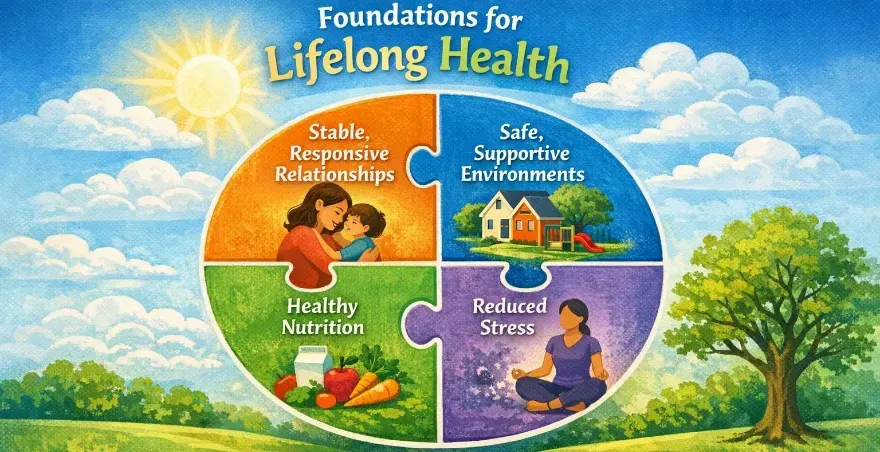
Key takeaways
- Wellness is a system, not a checklist.
- Mindset influences physical health through stress and recovery pathways.
- Daily habits compound into long-term health outcomes.
- Sleep and recovery are non-negotiable foundations.
- Social connection is a powerful determinant of well-being.
This guide treats lifestyle and wellness as foundational systems. It explains how mindset, habits, sleep, stress, movement, and relationships interact biologically over time. Rather than prescribing rules, it offers a framework for understanding how health is built — slowly, consistently, and cumulatively — across the lifespan.
What Wellness Really Means — Beyond “Diet and Exercise”
Wellness is the capacity to function well across physical, mental, emotional, and social domains. Diet and exercise are important inputs, but they do not operate in isolation. Sleep quality, stress exposure, emotional regulation, social belonging, and daily routines all influence how the body processes food, responds to movement, and recovers from effort.This broader view reframes health as integration, not optimization. The goal is not to maximize one variable but to maintain balance across many.
Wellness as Capacity, Not Appearance
Wellness is often mistaken for visible outcomes — body composition, energy levels, productivity. While these can reflect health, they are not the definition. True wellness is capacity: the ability to adapt, recover, and function across changing circumstances.The Relationship Between Mindset and Physical Health
Mindset influences health through well-established biological pathways. Thoughts, beliefs, and emotional patterns shape nervous system activity, hormone release, immune signaling, and inflammation. Chronic fear, hopelessness, or perceived lack of control keeps the body in a heightened stress state.Why “Positive Thinking” Is Not the Point
Mindset work is often misunderstood as forced positivity. In reality, effective mindset supports realism, adaptability, and self-compassion. Suppressing negative emotions increases stress rather than reducing it.Daily Habits as the Architecture of Health
Health is built through repetition. Daily habits influence biological systems far more than occasional intense efforts. Small behaviors repeated consistently shape metabolism, inflammation, cardiovascular health, and cognitive function over decades.- Regular movement and posture changes
- Consistent meal timing and food quality
- Predictable sleep and wake cycles
- Exposure to daylight and nature
- Mental pauses and reflection
Why Habits Matter More Than Willpower
Willpower is a limited resource. Habits reduce reliance on conscious effort by automating behavior. When healthy actions become default, health improves even during stressful or busy periods.Wellness-focused habits are designed to be low friction. They fit into daily life rather than requiring constant motivation. This is why habit design is more effective than rigid rules.
Sleep: The Cornerstone of Wellness
Sleep is not passive downtime; it is an active biological process essential for survival. During sleep, the brain clears metabolic waste, consolidates memory, regulates hormones, and coordinates immune function.Stress, Recovery, and Nervous System Balance
Stress itself is not harmful — lack of recovery is. The body is designed to oscillate between challenge and restoration. Problems arise when stress becomes constant and recovery insufficient.Recovery as a Skill, Not an Accident
Modern life often treats recovery as optional or indulgent. In reality, recovery must be practiced intentionally. This includes sleep routines, boundaries around work, low-intensity movement, breathing practices, and moments of stillness.Movement as a Wellness Practice
Movement supports wellness beyond fitness metrics. Regular movement improves circulation, glucose uptake, joint health, mood, and cognitive clarity. It also acts as a signal to preserve muscle, bone density, and metabolic capacity.Social Support and Human Connection
Humans are biologically social. Social connection influences immune function, cardiovascular health, mental health, and longevity. Chronic loneliness carries risks comparable to smoking or physical inactivity.Belonging, Purpose, and Meaning
Beyond social contact, a sense of belonging and purpose contributes to well-being. Feeling valued and connected reduces stress and supports psychological resilience.Wellness Across the Lifespan
Wellness needs change with age. Early adulthood emphasizes habit formation. Midlife prioritizes stress management and recovery. Later life focuses on preserving function, mobility, and social connection.Lifestyle & Wellness as the Base Layer of Health
Lifestyle and wellness form the base upon which nutrition plans, fitness programs, and medical treatments depend. Without stable routines, adequate sleep, and stress regulation, even the best interventions underperform.What Makes Wellness Sustainable
Sustainable wellness is flexible, realistic, and compassionate. It allows for imperfection while maintaining direction. It prioritizes recovery as much as effort.Why This Is an “Ultimate” Guide
This guide is “ultimate” not because it lists everything, but because it provides a framework. It explains how lifestyle inputs interact, why habits matter more than hacks, and how wellness supports health across decades.
Related Lifestyle and Wellness Topics
- Why Deliberate Choices Are Key to Achieving Genuine Happiness
- How Support Networks Enhance Your Mental and Physical Health
- Discover the Power of Mindfulness Meditation
- How to Improve Heart Rate Variability Through Lifestyle Changes
References:
- https://www.cdc.gov/well-being/about/index.html
- https://www.who.int/news-room/fact-sheets/detail/mental-health-strengthening-our-response
- https://www.nia.nih.gov/health/what-do-we-know-about-healthy-aging
- https://www.sleepfoundation.org/how-sleep-works/why-sleep-is-important
- https://www.health.harvard.edu/mind-and-mood/feel-good-hormones-how-they-affect-your-mind-mood-and-body