
Holistic Practices for Everyday Wellness and Longevity
Holistic Practices for Everyday Wellness and Longevity
Key takeaways
- Longevity-focused wellness emphasizes consistency over intensity.
- Low-impact movement supports metabolic and joint health.
- Reducing environmental toxin exposure lowers long-term disease risk.
- Sleep and circadian signaling influence aging pathways.
- Holistic practices work best as integrated daily habits.
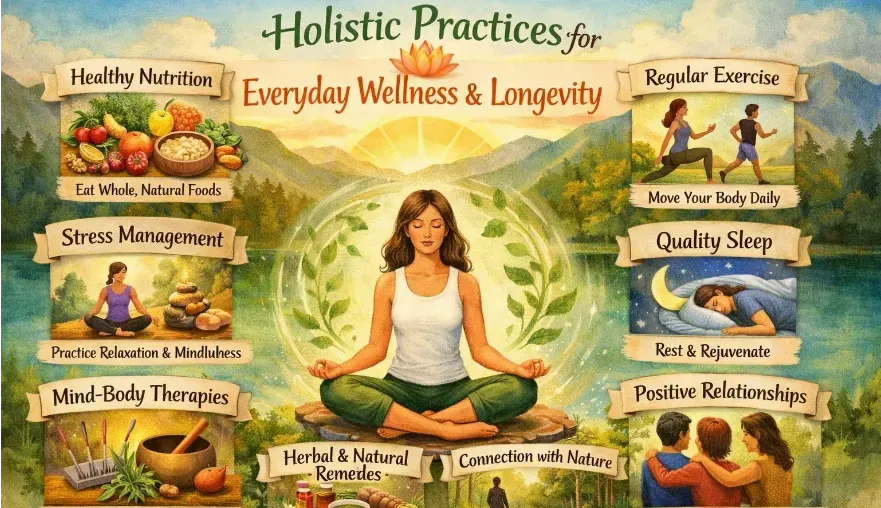
This guide brings together practical holistic practices that fit into daily life. It focuses on movement that preserves function, environmental choices that reduce toxic load, sleep and metabolic signaling tied to aging, inflammation control strategies, and thoughtful use of herbal and alternative wellness tools. The emphasis is not perfection, but alignment—working with the body rather than against it.
Movement for Longevity: Why Gentle Consistency Wins
Longevity-focused movement prioritizes regular, low-impact activity over intensity. Walking, swimming, light cycling, and mobility work place minimal strain on joints while providing powerful cardiovascular, metabolic, and neurological benefits. These forms of movement support circulation, insulin sensitivity, and mitochondrial health without requiring extended recovery.Movement as a Daily Signal, Not a Workout Event
From a longevity perspective, movement acts as a biological signal rather than a calorie-burning task. Regular movement tells the body that muscle, bone density, coordination, and cardiovascular capacity are still required.Detox & Environmental Health: Reducing Everyday Chemical Load
The body is equipped with detoxification systems—primarily the liver, kidneys, lungs, and gut. Problems arise not from toxins alone, but from chronic overload. Modern life introduces constant exposure to plastics, industrial chemicals, air pollutants, and endocrine disruptors that tax these systems.
Holistic detox is less about cleanses and more about exposure reduction—limiting what enters the system so natural detox pathways can function effectively.
Practical Ways to Support Environmental Health
Small, consistent choices reduce chemical burden meaningfully:- Using glass or stainless steel for food storage
- Avoiding microwaving plastics
- Choosing fragrance-free or low-toxicity personal care products
- Improving indoor air quality through ventilation
Sleep, AMPK, and the Biology of Aging
Sleep is deeply tied to longevity through its effects on metabolic signaling pathways. One key regulator is AMPK (adenosine monophosphate–activated protein kinase), an enzyme involved in energy balance, cellular repair, and aging processes.Circadian Alignment and Longevity Pathways
AMPK interacts closely with circadian rhythms. Late-night eating, irregular sleep schedules, and light exposure at night disrupt this coordination, weakening metabolic and repair signaling.Aligning sleep timing with natural light–dark cycles supports healthy AMPK activation and improves glucose regulation, mood stability, and energy levels. Longevity is influenced not just by what we do, but when we do it.
Inflammation Control as a Core Longevity Strategy
Chronic low-grade inflammation accelerates aging and underlies many chronic diseases. Unlike acute inflammation, which is protective, persistent inflammation quietly damages tissues over time.Lifestyle Patterns That Lower Inflammatory Load
Effective inflammation control focuses on patterns rather than single interventions:- Regular movement
- Consistent sleep
- Stress regulation
- Nutrient-dense eating
- Environmental awareness
Herbal & Alternative Wellness: Context Matters
Herbal and alternative practices have been used across cultures for centuries. Many herbs support digestion, relaxation, immune modulation, or sleep when used appropriately and consistently.Examples include ginger for digestive comfort, turmeric for inflammatory balance, chamomile for relaxation, and adaptogenic herbs for stress support. These tools work best as adjuncts rather than replacements for foundational habits.
Integrating Alternative Practices Safely
Alternative wellness practices should complement—not compete with—evidence-based care. Consulting knowledgeable practitioners and sourcing high-quality products reduces risk and improves effectiveness.Holistic Wellness as a Daily Practice
Holistic practices succeed when they fit daily life. Longevity is not built through extremes but through small, supportive actions repeated consistently over time.Related Lifestyle and Wellness Topics
- Discover the Profound Benefits of Swimming
- 8 Secrets for a Self-Healing Body
- How to Detoxify Microplastics, BPA, and Phthalates
- 15 Most Powerful Medicinal Herbs to Heal Your Body
References:
· https://www.cdc.gov/physical-activity-basics/benefits/
· https://www.niehs.nih.gov/health/topics/agents/endocrine/index.cfm
· https://www.nia.nih.gov/news/lack-sleep-middle-age-may-increase-dementia-risk
· https://pmc.ncbi.nlm.nih.gov/articles/PMC12214180/
· https://www.nccih.nih.gov/health/herbsataglance