
Hair Loss, Aging, and Healthspan: Causes, Treatments, and How to Decide What’s Right for You
Hair Loss, Aging, and Healthspan: Causes, Treatments, and How to Decide What’s Right for You
Key takeaways
- Most age-related hair loss is androgenic alopecia driven by follicle sensitivity to DHT.
- Hair loss patterns and progression differ significantly between men and women.
- Early treatment preserves hair; late treatment manages expectations.
- Hair loss affects emotional healthspan and deserves thoughtful, informed decisions.
What complicates matters is that hair loss isn’t a single condition with a single fix. It’s a process shaped by genetics, hormones, aging, and sometimes reversible health factors. Understanding why hair loss happens—and what can realistically be done about it—creates clarity where there’s often confusion and rushed decisions.
Androgenic alopecia: the most common driver of hair loss
The vast majority of age-related hair loss falls under androgenic alopecia. This accounts for roughly 95 percent of hair loss in men and a substantial proportion in women. While patterns differ, the underlying mechanism is similar: genetically susceptible hair follicles respond unfavorably to certain hormones over time.The role of hormones and follicle sensitivity
At the center of androgenic alopecia is dihydrotestosterone, or DHT. Both men and women produce testosterone, and some of that testosterone converts into DHT via enzymes called 5-alpha reductase. DHT binds strongly to androgen receptors in hair follicles.Why hair loss looks different in men and women
In men, hair loss typically follows a recognizable pattern—recession at the temples and thinning at the crown. These areas are especially sensitive to DHT, which explains the classic “horseshoe” pattern that develops over time.Other causes that should be ruled out
While androgenic alopecia is common, it’s not the only explanation for hair loss. Autoimmune conditions, severe psychological stress, nutritional deficiencies, hormonal shifts, and certain medications can all disrupt hair growth cycles.Medical treatments that slow or stabilize hair loss
Pharmacologic treatments aim to either stimulate hair growth or reduce follicle exposure to DHT. Minoxidil works locally to extend the growth phase of hair follicles, while medications like finasteride and dutasteride reduce DHT levels systemically.Adjunct therapies and procedural options
Beyond medications, there are supportive approaches such as ketoconazole shampoo, low-level laser therapy, and platelet-rich plasma (PRP) injections. Results vary, but for some people these tools complement medical therapy well.Choosing a specialist and building a plan
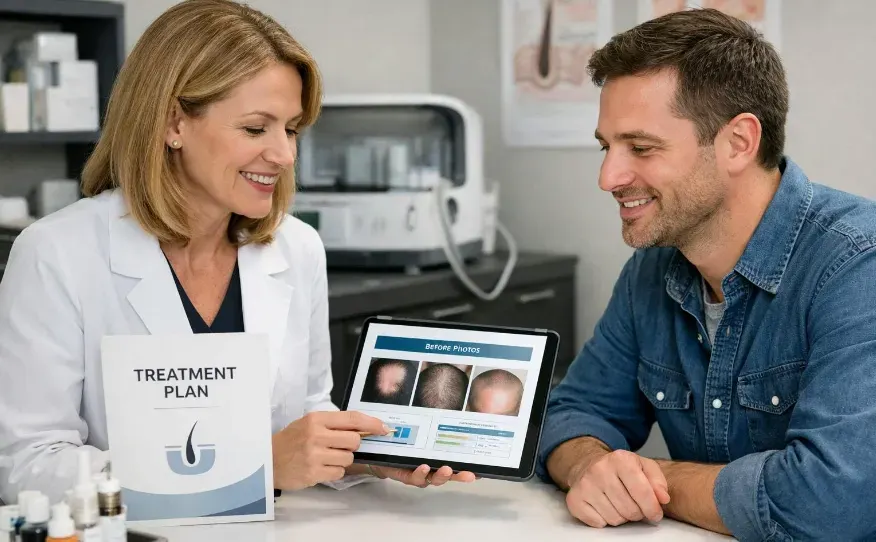
Hair loss decisions shouldn’t be made in isolation or haste. Multidisciplinary hair clinics can help rule out secondary causes, confirm diagnosis, and outline realistic expectations. A good specialist explains trade-offs clearly rather than promising miracles.Hair loss and emotional healthspan
It’s easy to dismiss hair loss as cosmetic, but distress around appearance has real psychological consequences. Anxiety, avoidance behaviors, and reduced self-esteem are common—especially when hair loss feels sudden or uncontrollable.The realistic takeaway on hair and aging
Hair loss is common, biologically driven, and deeply personal. Genetics load the gun, hormones pull the trigger, and time sets the pace. The earlier someone understands their risk and options, the more leverage they have.References:
· https://www.aad.org/public/diseases/hair-loss/treatment/male-pattern-hair-loss-treatment
· https://www.mayoclinic.org/diseases-conditions/hair-loss/diagnosis-treatment/drc-20372932
· https://medlineplus.gov/genetics/condition/androgenetic-alopecia/