
Beginner Home Workout Routine (No Equipment)
Beginner Home Workout Routine (No Equipment)
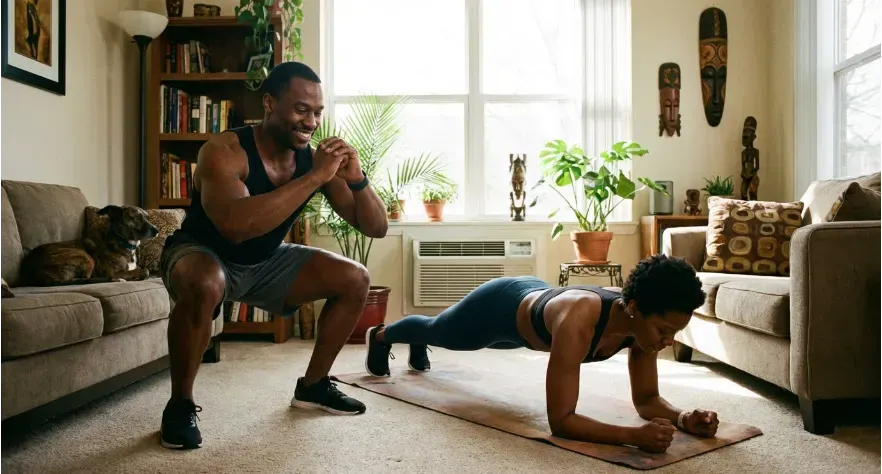
Key takeaways
- Beginners can build full-body strength using only bodyweight exercises.
- A simple 3-day-per-week structure supports steady progress and recovery.
- Focus on controlled movement and proper form before increasing intensity.
- Gradual progression in reps and difficulty drives long-term results.
If you’re new to training, this step-by-step plan builds on the principles outlined in Home Workouts That Work: Build Strength and Fitness Without a Gym, using simple bodyweight movements to create a balanced, sustainable program.
Who This Routine Is For
This plan is ideal for:- True beginners
- People returning after a long break
- Those without equipment
- Anyone wanting a simple, repeatable structure
Weekly Structure (3 Days Per Week)
Start with three non-consecutive days per week, such as:- Monday
- Wednesday
- Friday
Warm-Up (5–7 Minutes)
Perform the following movements at an easy pace:- March in place – 60 seconds
- Arm circles – 30 seconds forward, 30 seconds backward
- Bodyweight squats – 10 reps
- Hip circles – 10 each direction
- Light push-ups against a wall or countertop – 8 reps
The Beginner Full-Body Workout
Perform the following circuit 2–3 times. Rest 60–90 seconds between rounds.1. Bodyweight Squats
Reps: 10–12
Focus on controlled movement and full range of motion.2. Modified Push-Ups (Knees or Incline)
Reps: 8–10
Keep your core tight and body aligned.3. Reverse Lunges
Reps: 8 per leg
Step back slowly to maintain balance.4. Forearm Plank
Time: 20–30 seconds
Maintain a straight line from shoulders to heels.Cooldown (5 Minutes)
Slow your breathing and stretch major muscle groups:- Hamstring stretch
- Quad stretch
- Chest/shoulder stretch
- Child’s pose
- Deep diaphragmatic breathing
How to Progress After 2–4 Weeks
Once the workout feels manageable:- Add 2–3 reps per exercise
- Increase plank time by 10 seconds
- Add an extra round
- Slow down your tempo (3 seconds down, 1 second up)
Common Beginner Mistakes
- Skipping warm-ups
- Rushing repetitions
- Training every day without rest
- Ignoring proper breathing
- Comparing progress to others
When to Add Intensity
After 4–6 weeks of consistent training, you may:- Increase training frequency to 4 days per week
- Add short conditioning sessions
- Introduce light equipment
Staying Consistent
The most important factor for beginners is habit formation. Choose a time of day you can realistically maintain. Track your workouts. Celebrate small improvements.Final Thoughts
You do not need equipment to begin building strength and improving your fitness. A small, structured routine performed consistently can produce meaningful results.Start simple. Focus on form. Progress gradually.
Consistency beats intensity at the beginning.